


June 9, 2024
“Praise Him with trumpet sound; Praise Him with harp and lyre. Praise Him with timbrel and dancing; Praise Him with stringed instruments and pipe.” Psalms 150:3-4 (NASB)
“Let the word of Christ richly dwell within you, with all wisdom teaching and admonishing one another with psalms and hymns and spiritual songs, singing with thankfulness in your hearts to God. Whatever you do in word or deed, do all in the name of the Lord Jesus, giving thanks through Him to God the Father.” Colossians 3:16-17 (NASB)

What is your favorite genre of music? Have you ever thought about the holistic healing power of music? Who is your favorite singer or singing group and what does the Word of God have to say about the use of music?
 After a conversation with my daughter-in-love a couple of days ago, my curiosity was stirred even more about the therapeutic use of music in various life conditions and situations. I wanted to know from her what type of music my grandson Ayden who has autism likes listening to and what sounds may cause different responses.
Music is an innate part of every society. The holistic healing power of music is a multifaceted, complex, yet fascinating topic, playing an integral role in all aspects of human life. Its ability to touch us on a physical, emotional, psychological, social, and spiritual level makes it a unique and invaluable resource for health and well-being.
The American Psychological Association regards music as a form of medicine that improves health outcomes in various conditions. Whether through formal music therapy or everyday listening, music can be a profound source of healing and comfort. The healing power of music affects every aspect of our lives. The National Library of Medicine, John Hopkins Center for Music and Medicine, and other studies have proven that music has healing power.
I am also in a group with Dr. Alice Hudnall Cash who has done some fascinating work in the area of music. I was especially interested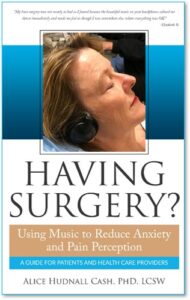 in her job because of my interest in the area of the interconnectedness of the mind, body, and spirit being cognizant of knowing that what affects one part of who we are affects other parts of who we are. I also presented Dr. Alice Hudnall Cash’s book and work as part of one of my Toastmasters’ speeches. Dr. Cash is one of the few clinical musicologists. She says music is her passion and using music to help ease the pain and suffering of others is her mission. Her website is www.surgicalserenitysolutions.com/
Physical Healing of  Music
Music
♦ Helps manage pain by triggering the release of endorphins, which are natural painkillers produced by the brain.
♦ Improves quality of sleep
♦ Improves the body’s immune system function
♦ Assist in regaining speech, mobility, and cognitive functions by stimulating the brain uniquely.
♦ Slow-tempo music can induce a relaxation response, decreasing heart rate, blood pressure
♦ For patients recovering from strokes or other neurological conditions, music can be a powerful tool in rehabilitation.
Emotional Healing of Music
♦ Music has a profound impact on emotions. Listening to uplifting or soothing music can elevate mood and reduce symptoms of depression and anxiety.
♦ Increases the amount of dopamine produced in the brain, which promotes feelings of wellness and personal motivation.
♦ Engages multiple areas of the brain, including those involved in emotion, memory, and motor control.
♦ Decreases the amount of cortisol in the body, reducing stress by increasing the amount of dopamine produced in the brain, which promotes feelings of well-being.
♦ Decreases the amount of cortisol in the body, reducing stress.
♦ Provides an acceptable and safe outlet for emotional expression.
♦ Helps process and heal from their own emotional experiences and experience joy. The Psalms also serve as a profound example of music’s role in emotional healing.
♦ Soothe emotional turmoil and bring peace. One of the most expressive examples of music’s healing power is the story of King Saul and David. In 1 Samuel 16:23, we read that whenever an evil spirit troubled Saul, David would play the harp, and Saul would find relief and feel better as the spirit left him.

Psychological Healing of Music
♦ Music can help individuals who have experienced trauma. Music therapy can be an effective form of treatment that can provide a safe space to express and process emotions particularly beneficial in cases of PTSD, where traditional forms of therapy might be challenging.
♦ Improves memory, attention, and executive function, especially in older adults.
♦ Promotes self-awareness and increases self-esteem.
♦ Increases personal motivation.
♦ Improves memory and cognitive performance.
♦ Reduces symptoms of depression.
Social and Cultural Healing of Music
♦ Enhance cognitive function in various ways by improving memory and attention in Alzheimer patients or other forms of dementia. Music can trigger memories and emotions that seem otherwise inaccessible.
♦ Music has the unique ability to bring people together, fostering a sense of community and belonging. Group music activities, such as choirs or drumming circles, can create strong social bonds and support networks, which are crucial for social and mental health.
♦ Has a powerful medium for cultural expression and preservation. It can be a source of pride and identity, helping individuals and communities heal from cultural trauma or displacement.
♦ Can also be a means of bridging cultural divides, promoting understanding and empathy among diverse groups.
♦ Can be used in their daily routines for self-care. Creating playlists for different moods, or simply taking time to listen to favorite songs can be powerful tools for maintaining mental health.
Spiritual Healing of Music
♦ The healing power of music is a theme that resonates deeply within the biblical narrative. Its perspective on the healing power of music underscores its divine origin and versatile role in our daily lives. Music is a gift from God, designed to heal and restore us in all aspects of our lives. Music is a powerful instrument of God’s healing grace and presence, healing and uplifting the human spirit. It was an important part of Israel’s worship and celebration. Singing was an expression of love and thanks, and it was a creative way to pass down oral traditions.
Here’s an exploration of this concept from a biblical perspective.
♦ Music is used in Praise and Worship. The Psalms contain numerous songs of praise and worship. Music in worship connects believers with God, fostering a sense of spiritual well-being and healing. Psalm 150:4 says, “Praise him with tambourine and dancing; praise him with strings and pipe!” Integrating music into church services is a practice rooted in biblical tradition. Worship through music is not only a means of glorifying God but also a way of ministering to the congregation, offering spiritual and emotional healing.
♦ Music often accompanies the manifestation of God’s divine presence. In 2 Chronicles 5:13-14, the temple musicians and singers played and sang in unison, and the glory of the Lord filled the temple. This illustrates how music can facilitate a tangible sense of God’s presence, bringing spiritual healing and comfort.
♦ Music Therapy in Christian Counseling: Christian counselors and therapists can incorporate music into their practice, using hymns, worship songs, and instrumental music to help clients process emotions and find comfort in God’s presence. Certified music therapists use music interventions to achieve therapeutic goals, tailored to individual needs. This can include listening to music, creating music, or using music as a background to facilitate other forms of therapy.
♦ Believers In Christ are encouraged to use music in their personal devotional life. Singing hymns, listening to worship music, and playing instruments can enhance one’s personal relationship with God and provide spiritual nourishment and healing.
♦ The prophetic literature also speaks of music as a sign of renewal and hope. Isaiah 35:10 prophesies, “And the ransomed of the Lord shall return and come to Zion with singing; everlasting joy shall be upon their heads; they shall obtain gladness and joy, and sorrow and sighing shall flee away.” Music symbolizes the ultimate healing and restoration that God promises to His people.
♦ Music is often associated with prophetic revelation and transformation. In 2 Kings 3:15, Elisha calls for a musician, and as the musician plays, the hand of the Lord comes upon Elisha, enabling him to prophesy. This underscores music’s role in opening hearts and minds to divine revelation and transformation.

MUSICAL HEART  CHALLENGE: As Christians, we should protect our minds from things that are not pure. Music that is not honoring to God should be avoided. Philippians 4:8, says “And now, dear brothers and sisters, one final thing. Fix your thoughts on what is true, and honorable, and right, and pure, and lovely, and admirable. Think about things that are excellent and worthy of praise.” (NLT)
 A LISTENING
  HEART: Worship should involve the whole person, and music helps lift a person’s thoughts and emotions to God. Through music we can reflect upon our needs and shortcomings as well as celebrate God’s greatness Colossians 3:16 says, “Let the message about Christ, in all its richness, fill your lives. Teach and counsel each other with all the wisdom he gives. Sing psalms and hymns and spiritual songs to God with thankful hearts.” (NLT)
 PRAYER: Father God, thank You for Your Word that helps us understand how we are to use Your gift of music, in the Precious, Powerful, and Preeminent name of Jesus Christ our Savior and Lord, Amen.